
Struggling with fertility can be emotionally and physically demanding. When you’re trying to conceive naturally or pursuing assisted reproductive technologies (ART) like in-vitro fertilisation (IVF) or intrauterine insemination (IUI), the journey can feel long and uncertain. In Singapore and across the world, many women seek support not only from conventional medical treatments but also from traditional healing systems such as Traditional Chinese Medicine (TCM).
TCM — encompassing acupuncture, herbal medicine, dietary guidance, and lifestyle adjustments — offers strategies to enhance your body’s natural fertility potential. This article explains how TCM approaches female fertility, reviews scientific evidence including research on acupuncture and herbs, and provides practical guidance if you’re considering this path.
What Is Infertility?
Infertility is generally defined as the inability to achieve pregnancy after at least 12 months of regular, unprotected intercourse for women under 35, or six months for women over 35. Causes can involve ovulation disorders, poor egg quality, endometriosis, tubal blockage, low sperm count or low sperm motility from a partner, or unexplained factors.
Conventional treatments, such as hormonal medications, IVF, or IUI, aim to overcome specific physiological barriers to conception. However, these treatments are not always successful on the first attempt and can be both emotionally and financially taxing. Many women seek TCM as a complementary strategy to improve overall reproductive health and support conventional procedures.
How TCM Views Fertility
In TCM, fertility is not viewed merely as a single organ’s function but as the result of balanced internal systems. The Kidney system in TCM governs growth, reproduction, and essence (精Jing) which is thought of as a fundamental vitality that influences reproductive capacity. The Liver system helps with the smooth flow of Qi (energy) and Blood, which supports ovulation and menstrual regularity. The Spleen system aids digestion and the transformation of nutrients — essential for nourishing blood and reproductive tissues.
When these systems are balanced, menstruation is regular, hormones are stable, and the reproductive environment is strong. When imbalances occur such as Qi stagnation, Blood deficiency, or Kidney Yin/Yang disharmony, fertility can be affected.
TCM seeks to restore harmony by strengthening the body’s functional systems, improving circulation, regulating hormones, and reducing stress all of which play supportive roles in fertility.
How TCM May Improve Fertility
1. Acupuncture
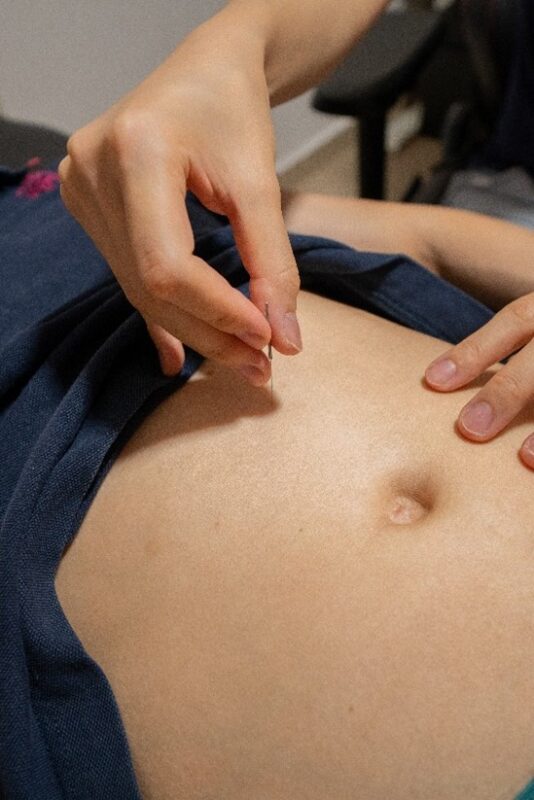
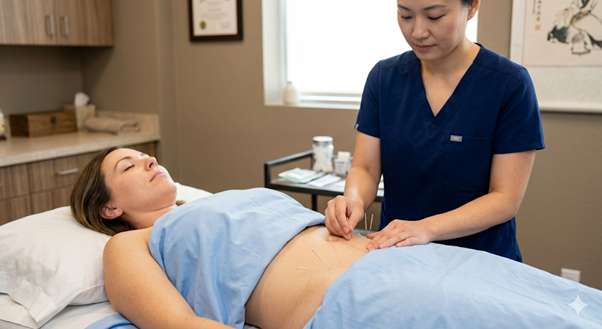
Acupuncture is one of the most widely studied components of TCM for fertility support. Fine, sterile needles are inserted into specific points on the body to regulate Qi, improve blood flow, and modulate the nervous and endocrine systems.
Multiple clinical studies and reviews have explored the effects of acupuncture on pregnancy outcomes in women undergoing IVF:
- A systematic review and meta-analysis of multiple trials found that acupuncture may improve the clinical pregnancy rate in women undergoing IVF compared with controls who did not receive acupuncture — especially in women with prior unsuccessful IVF attempts [1].
These findings suggest that acupuncture may act to enhance the effectiveness of IVF protocols or support overall reproductive function, particularly where stress, circulation, or hormonal imbalance is an issue.
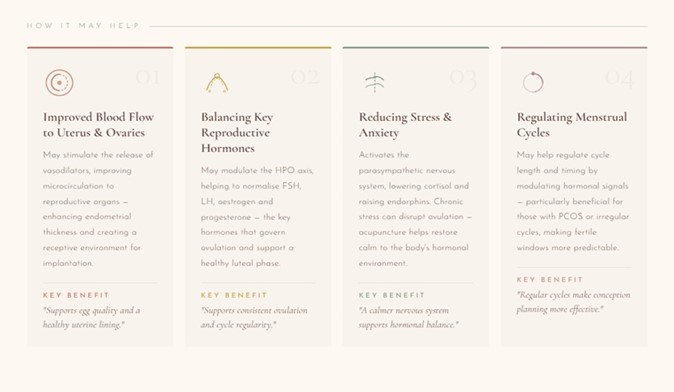
All of these factors contribute to a more supportive environment for conception and embryo implantation.
2. Chinese Herbal Medicine
Chinese herbal formulas are designed according to a woman’s unique TCM pattern diagnosis. Herbs may nourish Kidney essence, regulate menstrual cycles, improve blood flow, resolve stagnation, and support general vitality.
Evidence from large clinical trials also indicates positive outcomes:
- A meta-analysis involving thousands of women found that Chinese herbal medicine significantly improved pregnancy rates in women treated for infertility compared with conventional Western fertility drugs alone[2].
- Clinical reports suggest that herbal formulas can enhance endometrial thickness, a factor associated with higher implantation rates, when used alongside acupuncture[3].
Herbal medicine is typically used 3-6 months prior to attempting conception or in combination with IVF/IUI cycles, and it can be tailored and adjusted according to your treatment response and cycle pattern.
3. Acupuncture + Herbal Medicine During IVF/IUI
Combining acupuncture with Chinese herbs appears to offer synergistic benefits in some contexts. Studies of TCM combined with ART procedures — such as IVF or IUI — have shown promising results:
- A retrospective comparative study of women undergoing IUI with weekly acupuncture and herbs reported significantly higher pregnancy (and live birth) rates compared with a control group receiving only conventional therapy[4].
- Observational data from TCM-informed clinics have noted cases where IVF cycles that were previously unsuccessful became successful after a period of TCM treatment (acupuncture + herbs), indicating that TCM may improve ovarian function and reproductive readiness in challenging cases[5].
While more randomized controlled trials are needed to further quantify these benefits, existing evidence supports the potential for TCM to contribute positively when integrated thoughtfully with conventional care.
Practical Benefits Beyond Clinical Pregnancy Rates
Women often report improvements in factors that may influence fertility outcomes beyond conception rates:
- Reduced stress, anxiety, and emotional tension
- Improved sleep quality
- Regulation of menstrual cycles
- Enhanced general well-being during ART stimulation cycles
- Better nutritional and hormonal balance
Whether you’re pursuing natural conception or assisted reproduction, these supportive effects can make the journey more comfortable and potentially more successful.
What to Expect in a TCM Fertility Consultation
- Detailed medical and fertility history
- TCM tongue and pulse diagnosis
- Pattern differentiation to identify underlying imbalances
- A personalised treatment plan that may include acupuncture, herbal formulas, dietary guidance, and lifestyle recommendations
Typically, fertility support begins 3–6 months before attempting conception or an ART cycle, allowing time to regulate cycles, improve hormonal balance, and strengthen reproductive Qi and Blood.
If you are already in an IVF or IUI cycle, TCM treatments can be scheduled around key points in the cycle to optimise your physical and emotional readiness.
Lifestyle Approaches to Support Fertility
In addition to acupuncture and herbs, lifestyle habits play a valuable role:
Balanced Diet:
Eat nutrient-rich, warm foods that support Blood and Qi — such as whole grains, lean protein, vegetables, and warming soups.
Stress Management and exercise:
Mind-body practices like meditation, tai chi, and gentle exercise can calm the nervous system and promote hormonal balance. Light to moderate movement enhances circulation without overtaxing the body.
Sleep Quality:
Aim for consistent, restful sleep to support endocrine function.
Social Support:
Fertility challenges can be isolating — connecting with supportive friends or a community helps emotional resilience.

Safety and Considerations
When administered by a qualified TCM physician, acupuncture and herbal medicine are generally safe and well-tolerated. It’s essential to:
- Inform all healthcare providers (fertility specialist, obstetrician, etc.) about all treatments you are receiving.
- Discuss any medications or herbal formulas to avoid potential interactions.
- Choose credentialed practitioners with experience in fertility-related TCM.
TCM should complement — not replace — the medical care and monitoring you receive from your fertility clinic.
Frequently Asked Questions
Does acupuncture guarantee pregnancy?
No single therapy can guarantee pregnancy; however, acupuncture may improve factors associated with successful conception and can enhance outcomes when combined with medical treatments like IVF or IUI.
How long before conception should I start TCM fertility support?
Ideally 3–6 months before attempting to conceive or before beginning an ART cycle allows time to regulate cycles and improve internal balance.
Is TCM safe during an IVF cycle?
Yes, when coordinated with your fertility team. Timing and selection of treatments should be personalised.
Can men also benefit from TCM for fertility?
Although not the scope of this article, yes — TCM can support sperm quality, circulation, and overall reproductive health in men.
Closing Thoughts
Female fertility is influenced by a complex interplay of hormonal, emotional, and physiological factors. TCM supports fertility through a holistic lens — nurturing balance, improving circulation, and addressing the underlying conditions that may affect ovulation, hormone regulation, and reproductive tissue health.
If you’re navigating fertility challenges — whether naturally or with IVF/IUI — TCM offers a gentle, personalised pathway that works with your body.
At Min Ann Medical Hall, Physician Jacinda Chee works with women seeking to improve their reproductive health through an integrative approach that honours both ancient wisdom and modern evidence. To explore how TCM can support your fertility journey, consider scheduling a consultation with us today.
[1] https://pubmed.ncbi.nlm.nih.gov/31200701
[2] https://www.sciencedirect.com/science/article/abs/pii/S0965229914001915?via%3Dihub
[3] https://pmc.ncbi.nlm.nih.gov/articles/PMC8093064
[4] https://www.sciencedirect.com/science/article/abs/pii/S1876382011000448