Menopause is a natural life transition, but the changes it brings can sometimes feel overwhelming. You may find yourself suddenly dealing with hot flushes during meetings, waking up at night drenched in sweat, or feeling more irritable or anxious than usual. Sleep may become lighter, your energy levels may fluctuate, and your body may not feel quite like it used to.
While menopause is a normal part of ageing, the symptoms can affect your daily life, work performance, and emotional well-being. Traditional Chinese Medicine (TCM) offers a gentle, holistic approach to support women through this transition by addressing the underlying imbalances rather than simply relieving individual symptoms.
If you are looking for a natural and personalised way to manage menopause, TCM may help your body regain balance and adapt more comfortably to this new phase.
What Is Menopause?
Menopause marks the end of a woman’s reproductive years. It is diagnosed when you have gone 12 consecutive months without a menstrual period. Most women experience menopause between the ages of 45 and 55, although the transition can begin earlier during a phase known as perimenopause.
From a Western medical perspective, menopause occurs because the ovaries gradually produce less oestrogen and progesterone. These hormones regulate the menstrual cycle and play important roles in bone health, metabolism, mood regulation, and sleep.
As hormone levels fluctuate and decline, the body adjusts to a new hormonal environment. This adjustment period is what leads to many of the symptoms associated with menopause.
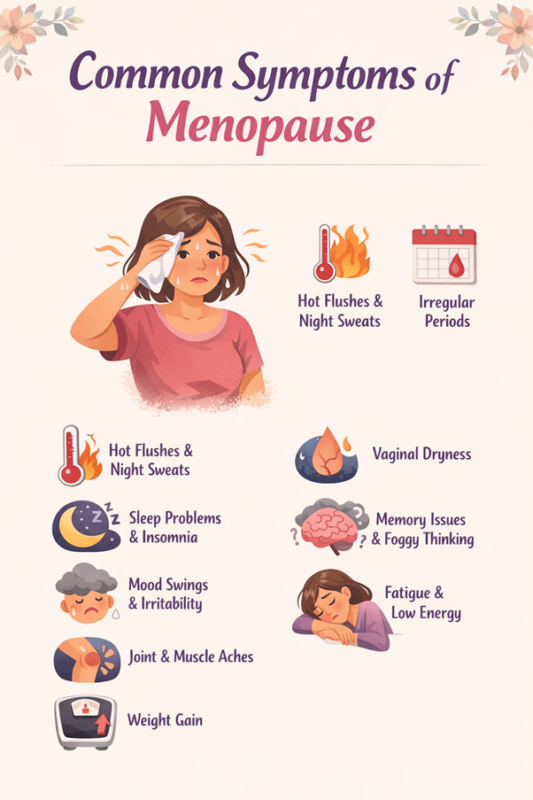
Common Symptoms of Menopause
Every woman’s experience is different. Some may have mild symptoms, while others find that menopause significantly affects their quality of life.
Common symptoms include:
- Hot flushes and night sweats
- Sleep disturbances or insomnia
- Mood swings, irritability, anxiety, or low mood
- Irregular or missed periods during perimenopause
- Vaginal dryness and reduced libido
- Difficulty concentrating or memory lapses
- Joint and muscle aches
- Fatigue or low energy
- Weight gain, especially around the abdomen
Understanding Menopause: Western and TCM Perspectives
Western Medical View
The primary driver of menopause symptoms is the decline in oestrogen and progesterone. Oestrogen helps regulate body temperature, supports bone density, and influences mood and sleep. When levels drop, the body’s temperature regulation becomes more sensitive, leading to hot flushes and night sweats.
Hormonal changes can also affect neurotransmitters, contributing to mood changes, anxiety, and sleep difficulties.
TCM Perspective
In TCM, menopause is seen as a natural stage of ageing associated with a gradual decline in Kidney energy. The “Kidney” in TCM refers to a functional system responsible for growth, reproduction, ageing, and the storage of vital essence (Jing).
As a woman ages, Kidney essence naturally declines. This can lead to an imbalance between Yin (cooling, nourishing, and moistening functions) and Yang (warming, activating, and energising functions).
Different patterns may present:
In TCM, menopause is seen as a natural stage of ageing associated with a gradual decline in Kidney energy. The “Kidney” in TCM refers to a functional system responsible for growth, reproduction, ageing, and the storage of vital essence (Jing).
As a woman ages, Kidney essence naturally declines. This can lead to an imbalance between Yin (cooling, nourishing, and moistening functions) and Yang (warming, activating, and energising functions).
Different patterns may present:
In TCM, menopause is seen as a natural stage of ageing associated with a gradual decline in Kidney energy. The “Kidney” in TCM refers to a functional system responsible for growth, reproduction, ageing, and the storage of vital essence (Jing).
As a woman ages, Kidney essence naturally declines. This can lead to an imbalance between Yin (cooling, nourishing, and moistening functions) and Yang (warming, activating, and energising functions).
Different patterns may present:
- Hot flushes and night sweats
- Dry skin or vaginal dryness
- Insomnia or restless sleep
- Irritability or anxiety
Kidney Yang Deficiency
- Fatigue and low energy
- Sensitivity to cold or cold limbs
- Lower back or knee weakness
- Low mood or lack of motivation
Some women may also experience patterns involving Liver Qi stagnation (mood swings, irritability) or Spleen weakness (bloating, weight gain, fatigue).
TCM treatment focuses on strengthening Kidney function, restoring Yin–Yang balance, and supporting the body’s natural adaptation to hormonal changes.
TCM Treatment Options for Menopause
TCM Treatment Options One of the key strengths of TCM is its personalised approach. No two women receive the exact same treatment.for Menopause
Herbal Medicine
Chinese herbal therapy is commonly used to support menopause. Treatment principles may include:
- Nourishing Kidney Yin to reduce heat and dryness
- Supporting Kidney Yang to improve energy and warmth
- Clearing internal heat to relieve hot flushes and night sweats
- Regulating Liver Qi to stabilise mood
- Strengthening the Spleen to support digestion and metabolism
For example:
If you experience hot flushes, night sweats, and insomnia
Treatment may focus on nourishing Yin and clearing deficient heat.
If you feel tired, cold, and low in mood
Herbs may be prescribed to warm and support Kidney Yang and improve vitality.
Herbal prescriptions are customised and adjusted over time based on your response and progress.
Acupuncture
Acupuncture can help regulate the body’s internal balance and reduce menopause symptoms.
Benefits may include:
- Reduced frequency and intensity of hot flushes
- Improved sleep quality
- Better mood stability
- Reduced stress and anxiety
- Relief from joint or muscle aches
Fine, sterile filiform needles are inserted at specific points to regulate Qi circulation and support hormonal balance. Our clinic also specialises in Re-Balancing Acupuncture which also helps in the balancing of the body’s Qi and unblocking of the Meridian channels without the need to leave the needles in the body, ie. Quick needling. Many women do notice improvements after several sessions.
For women with Yang deficiency or cold symptoms, moxibustion may also be used. This gentle warming therapy helps strengthen Yang energy and improve circulation.
Lifestyle Tips to Support Your Body During Menopause
In addition to professional treatment, simple lifestyle habits can help ease the transition.
Eat a Balanced, Nourishing Diet
- Focus on warm, cooked foods such as soups, stews, and porridges
- Include whole grains, leafy vegetables, nuts, and lean protein
- Limit deep-fried, spicy, or overly processed foods
- Reduce cold drinks and raw foods if you experience digestive weakness
Reduce cold drinks and raw foods if you experience digestive weakness
Prioritise Quality Sleep
- Maintain a regular sleep schedule
- Avoid heavy meals or caffeine late in the evening
- Stop eating or drinking about 2–3 hours before bedtime
- Soak your feet in warm water to relax the body and calm the mind
Adequate sleep helps preserve Yin energy and supports hormonal regulation.
Stay Physically Active
Regular movement helps maintain bone health, improve circulation, and reduce stress.
Suitable activities include:
- Brisk walking
- Stretching or light strength exercises
- Yoga or tai chi
Consistency is more important than intensity.
Manage Stress Effectively
Emotional stress can worsen hot flushes, sleep problems, and mood changes.
Helpful strategies include:
- Deep breathing or meditation
- Engaging in hobbies you enjoy
- Spending time in nature
- Listening to music or creative activities
Stay Connected
Menopause is a major life transition, and emotional support matters. Spending time with family, friends, or supportive communities can help you feel understood and less alone during this period.
You Don’t Have to Navigate Menopause Alone
Menopause affects every woman differently. For some, it is a smooth transition. For others, the symptoms can interfere with daily life, work, and emotional well-being.
With the right support, this phase can be managed comfortably. TCM focuses on strengthening your body, restoring internal balance, and helping you move through menopause with greater stability and confidence.
Frequently Asked Questions
How long do menopause symptoms last?
Symptoms may last from a few months to several years. On average, women experience symptoms for about 4 to 5 years, although this varies widely.
Is TCM treatment for menopause safe?
When prescribed by a qualified TCM physician, herbal medicine and acupuncture are generally safe with minimal side effects. Treatment is tailored to your individual condition.
What does “Kidney deficiency” mean in TCM?
It does not refer to physical kidney disease. In TCM, the Kidney system governs reproduction, ageing, and vitality. “Deficiency” refers to an imbalance in this functional energy system.
Can TCM be combined with Western medicine or HRT?
Many women use TCM alongside conventional treatments. It is important to inform both your doctor and TCM physician about all medications and supplements to avoid adverse interactions.
Can you still get pregnant during perimenopause?
Yes. Ovulation may still occur irregularly during perimenopause, so pregnancy is possible until you have gone 12 months without a period.
How is TCM different from hormone replacement therapy (HRT)?
HRT replaces hormones directly. TCM works by supporting the body’s natural regulatory systems and restoring internal balance, often with fewer side effects.
Medical Disclaimer
The information provided above is for general educational purposes only and should not be considered medical advice. Every individual’s condition is different. For personalised assessment and treatment based on your specific symptoms and body constitution, please consult a qualified TCM physician.
If you are experiencing menopause symptoms that affect your quality of life, consider scheduling a consultation with Physician Jacinda Chee at Min Ann Medical Hall to explore a tailored TCM approach for your needs.